• About
    • At A Glance
    • Management Team
    • Board of Directors & Ownership
    • Our History
    • Corporate Social Responsibility
    • Quality Management
    • Health & Safety
    • Environmental Policy
    • Indigenous Relationships
    • Regions
      • Canada
      • Indonesia
      • Africa
  • Services
    • Water
      • Aquatic Ecology
      • Effects Monitoring & Ecotoxicology
      • Hydrogeology
      • Hydrology
      • Marine Resources Management
      • Regulatory Permitting (Water)
    • Land
      • Forest Management
      • Infrastructure Development
      • Regulatory Permitting (Land)
      • Terrestrial & Wetland Ecology
    • People
      • Climate Change
      • Community Health & Wellbeing
      • Indigenous Relations & Collaboration
      • Socio-Economics
    • Technology
      • AI & Computer Vision
      • Data Analytics
      • GIS & Mapping
      • Remote Sensing
  • Sectors
    • Development Assistance
    • Forestry
    • Infrastructure
    • Mining & Exploration
    • Oil & Gas
    • Ports & Marine Infrastructure
    • Pulp & Paper
    • Renewable Energy
  • Projects
  • News
  • Careers
    • Careers at Hatfield
    • Current Opportunities
    • Why Work at Hatfield?
  • Contact

Pulp and Paper Environmental Effects Monitoring

You are here: Home / Projects / Pulp and Paper Environmental Effects Monitoring

Pulp and Paper Environmental Effects Monitoring

Client:

Pulp and paper mills with marine and freshwater receiving environments

Location:

Western Canada

Dates:

1992 – Ongoing (Pre-cycle one)

Background:

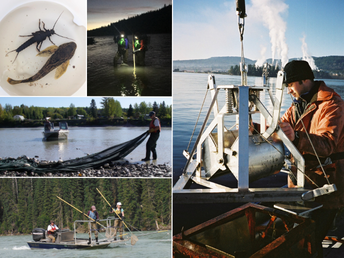
Hatfield designed and implemented Environmental Effects Monitoring (EEM) programs to meet federal Pulp and Paper Effluent Regulations for the majority of pulp mills in western Canada since the EEM framework was introduced in 1992. From that time to the present, Hatfield’s biologists and ecotoxicologists have assessed the health of aquatic communities in mill receiving environments over ten multi-year monitoring cycles, with Cycle Eleven studies currently underway until 2028.

Services Provided:

Hatfield supports our pulp and paper clients through all aspects of EEM, from study design, biological monitoring for fish and fish habitat, investigation of cause and investigation of solutions phases, and interpretive reporting for Environment and Climate Change Canada (ECCC) and/or provincial regulators.

As each pulp mill has specific requirements for EEM, Hatfield has completed a wide variety of scientific studies to assess effects on the aquatic receiving environment. These typically include:

  • Fish population surveys, using a variety of fish sentinel species to assess fish health endpoints, including health and reproductive indices, population characteristics, and historically fish tissue studies (dioxins and furans, no longer required at any mill in recent cycles due to environmental improvements)
  • Fish habitat studies, assessing benthic invertebrate community characteristics (following EEM and/or CABIN methodology), plankton, periphyton, water quality, and sediment quality; and
  • Sublethal toxicity testing of effluents to assess any effects on the survival, growth and reproduction of representative aquatic organisms.

With our extensive history working with pulp mills and regulators on the development of EEM studies, Hatfield is uniquely positioned to support pulp mills in navigating through their specific EEM programs, including:

  • Standard field-based biological monitoring studies using a wide range of sentinel species, including a wide range of freshwater and marine finfish species, crustaceans and molluscs;
  • Alternate biological study designs using unique field-based or laboratory approaches to define effects, including mesocosms (model ecosystems), caged bivalves, or long-term sublethal toxicity testing protocols;
  • Magnitude and extent studies for defining effects on fish and fish habitat; and
  • Investigations of Cause and Investigations of Solutions.

Hatfield works with clients to find efficiencies with EEM programs, including aligning study designs and reporting requirements with other aquatic monitoring programs (e.g., Provincial monitoring requirements), as well as combining monitoring programs between multiple pulp mills discharging to the same receiving environment to maximize efficiency and effectiveness.
Pulp and Paper Environmental Effects Monitoring

Pulp and Paper Environmental Effects Monitoring

February 12, 2026 by

Find out more about our services from our team of technical experts

Connect With Us
  • Home
  • About
  • Projects
  • News
  • Careers
  • Contact
  • Agent Orange

Sectors

  • Development Assistance
  • Forestry
  • Infrastructure
  • Mining & Exploration
  • Oil & Gas
  • Ports & Marine Infrastructure
  • Pulp & Paper
  • Renewable Energy

Services

  • WATER
  • Aquatic Ecology
  • Effects Monitoring & Ecotoxicology
  • Hydrogeology
  • Hydrology
  • Marine Resources Management
  • Regulatory Permitting (Water)
  • LAND
  • Forest Management
  • Infrastructure Development
  • Regulatory Permitting (Land)
  • Terrestrial & Wetland Ecology
  • PEOPLE
  • Climate Change
  • Community Health & Wellbeing
  • Indigenous Relations & Collaboration
  • Socio-Economics
  • TECHNOLOGY
  • AI & Computer Vision
  • Data Analytics
  • GIS & Mapping
  • Remote Sensing
Copyright © Hatfield Consultants
  • Terms & Conditions
  • Privacy Policy
  • About
    ▼
    • At A Glance
    • Management Team
    • Board of Directors & Ownership
    • Our History
    • Corporate Social Responsibility
    • Quality Management
    • Health & Safety
    • Environmental Policy
    • Indigenous Relationships
    • Regions
      ▼
      • Canada
      • Indonesia
      • Africa
  • Services
    ▼
    • Water
      ▼
      • Aquatic Ecology
      • Effects Monitoring & Ecotoxicology
      • Hydrogeology
      • Hydrology
      • Marine Resources Management
      • Regulatory Permitting (Water)
    • Land
      ▼
      • Forest Management
      • Infrastructure Development
      • Regulatory Permitting (Land)
      • Terrestrial & Wetland Ecology
    • People
      ▼
      • Climate Change
      • Community Health & Wellbeing
      • Indigenous Relations & Collaboration
      • Socio-Economics
    • Technology
      ▼
      • AI & Computer Vision
      • Data Analytics
      • GIS & Mapping
      • Remote Sensing
  • Sectors
    ▼
    • Development Assistance
    • Forestry
    • Infrastructure
    • Mining & Exploration
    • Oil & Gas
    • Ports & Marine Infrastructure
    • Pulp & Paper
    • Renewable Energy
  • Projects
  • News
  • Careers
    ▼
    • Careers at Hatfield
    • Current Opportunities
    • Why Work at Hatfield?
  • Contact